
Sun in Aquarius (Sidereal) — February 13 to March 14, 2026
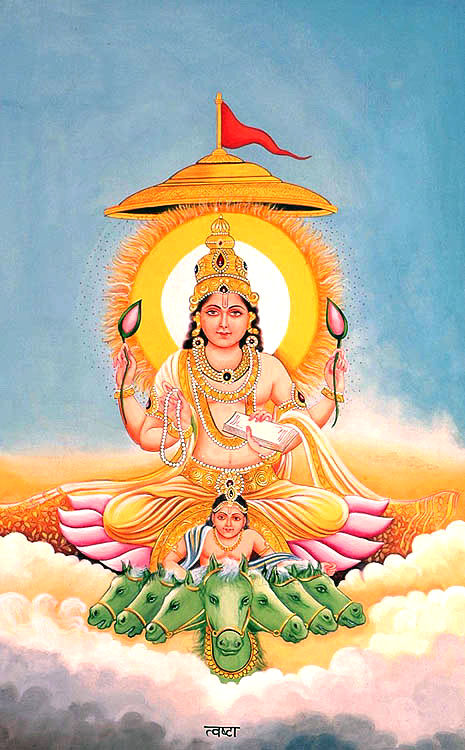
During this period, the Sun transits the sidereal sign of Aquarius (Kumbha). The Aditya presiding over Aquarius is Tvaṣṭṛ (Tvaṣṭā), the celestial architect described in the Ṛg Veda as the master craftsman endowed with supreme intelligence and creative power. He is the divine innovator who shapes forms through māyā, fashions weapons for both devas and asuras, and therefore represents diplomacy, technical skill, and neutrality between opposing forces.
Tvaṣṭā also rules Chitra Nakṣatra, bridging perfection with practicality and design with execution. Mythologically, he maintains an ambivalent relationship with Indra, symbolising the tension between authority and independent creation. Thus, Aquarius energy carries an undercurrent of originality, reform, and the desire to operate outside rigid hierarchies. He is said to dwell within plants and medicinal herbs and is the guardian of Soma, the elixir of vitality. The sign Kumbha, symbolised by a pot or vessel, relates to nourishment, healing substances, and collective welfare. Traditionally, this sign is associated with medicines, formulations, and systems that serve society at large.
Planetary Transits and Eclipses
The Sun joins Venus, Mercury, and Rahu in Aquarius, marking the beginning of an eclipse-activated solar month. An annular (“ring-of-fire”) solar eclipse occurs on 17 February in Dhanishta Nakṣatra (4th pada) at 12.13 GMT. Dhanishta signifies prosperity, rhythm, and material abundance and is governed by the Aṣṭa Vasus, the deities of elemental balance and cosmic order. The 4th pada falls in Scorpio Navāṁśa, adding emotional intensity and a more forceful tone to events. Individuals with natal Sun, Moon, or Ascendant in Dhanishta in Aquarius may experience heightened focus in finances, health, and life direction. Eclipse effects typically unfold across a six-month window. For details on the solar eclipses for the year including analysis, please visit
https://vijayajyoti.com/eye-on-the-sky-solar-eclipses-of-2026/
A lunar eclipse follows a fortnight later on 3 March in Purva Phalguni; traditionally, a solar eclipse followed by a lunar eclipse is considered supportive for restoration of balance and improvement in collective order.
On 23 February, Mars moves from Capricorn into Aquarius, joining the existing cluster of planets. With most planets (excluding the nodes) concentrated in Aquarius, retrograde Jupiter in Gemini, and Saturn in Pisces, a Śūla Yoga is formed. This configuration generates intensity, ambition, and internal pressure, often accompanied by decisive turning points or structural change. The yoga relaxes as the Moon moves beyond these signs. Jupiter’s aspect from Gemini helps moderate friction, and further relief comes as Venus joins Saturn in Pisces on 1 March, softening outcomes through diplomacy.
Another point to note is that with Mars entering Aquarius, the planets become hemmed between the lunar nodes — Rahu in Aquarius and Ketu in Leo — forming a Kāla Amṛta Yoga. This yoga will prevail until 1 August. This configuration concentrates karmic forces and intensifies destiny-driven developments, as all planetary energies are confined to one half of the zodiac. Such compression often translates into heightened collective pressure on governments, institutions, and social systems, exposing weaknesses and triggering sudden reversals or policy shifts. Although the atmosphere may initially feel restrictive or unsettled, the yoga ultimately acts as a mechanism of purification and course correction, dissolving outdated patterns and steering society toward more sustainable and balanced order.
Mercury moves swiftly through Aquarius before turning retrograde on 26 February and returning toward the Sun, becoming combust with the exact conjunction on 4 March. Combustion internalises thought processes and encourages reflection and purification of intent. Mercury’s retrograde phase can reopen negotiations, forcing a reassessment of plans. Mercury subsequently engages in planetary war with Venus on 28 February, where its precision and focus will prevail.
Venus enters exaltation in Pisces on 1 March, enhancing compassion, artistry, and grace. However, its conjunction with Saturn demands sobriety, realism, and responsibility in relationships and finances. Between 7–9 March Venus gains strength relative to Saturn while Saturn becomes combust from 8 March to 12 April, emphasising restructuring, accountability, and karmic review.
A significant positive shift occurs as Jupiter turns direct in Gemini on 11 March, restoring momentum, bringing clarity, and allowing stalled matters since mid-2025 to progress more smoothly. Jupiter remains in Gemini until 1 June supporting learning, trade, communication, and negotiation.
On 14 March, the Mercury–Mars planetary war heightens competitive intensity and strategic action. Mercury again dominates through intellect and tactical skill rather than force. This period highlights that communication, negotiation, and intelligent planning will be more effective than forceful tactics.
Overall, the month favours disciplined thinking, measured action, and refined communication. Success comes less through confrontation and more through clarity, strategy, and tactful expression. Taken together, the Śūla and Kāla Amṛta yogas indicate a build-up of collective pressure and decisive turning points, while Mercury’s retrogradation and Jupiter’s direct motion act as timing mechanisms for release. What first appears as delay or friction under Mercury often becomes the catalyst for correction and forward movement once Jupiter turns direct.
Festivals
Mahā Śivarātri — 15 February
Observed on the 14th tithi of the dark half of Māgha. Worship of Lord Śiva supports the dissolution of fear, ignorance, and inner darkness.
Holi — 2 March
The festival of colours marks renewal, harmony, and the arrival of spring.
Closing Prayer
May we be blessed with Tvaṣṭā’s grace for felicity and diplomacy to prevail in world affairs
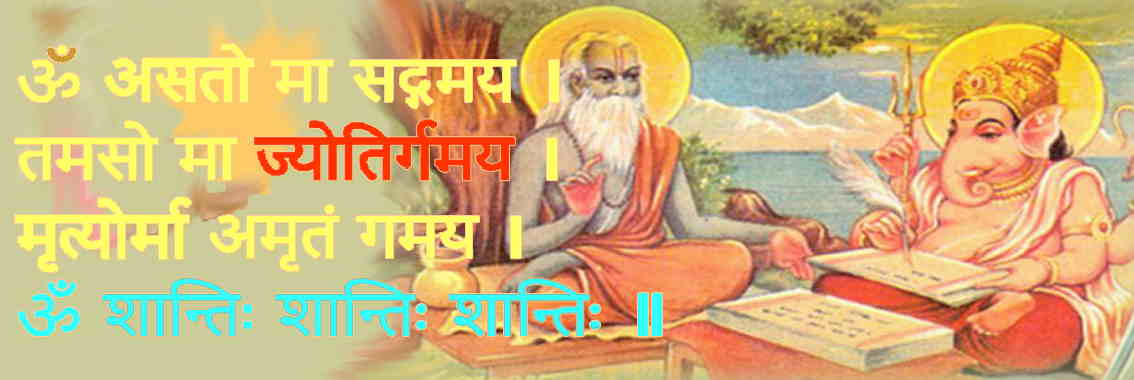
Here is a peace prayer we could chant
ॐ स्वस्ति प्रजाभ्यः परिपालयन्ताम्
न्यायेन मार्गेण महीं महीशाः ।
गोब्राह्मणेभ्यश्शुभमस्तु नित्यम्
लोकास्समस्तास्सुखिनो भवन्तु ।।
May there be prosperity among the people; may the rulers protect the world through justice and righteous governance; may the cows and brāhmaṇas (keepers of knowledge and wisdom) enjoy lasting auspiciousness; may all beings flourish in well-being; may the rains fall in due season and the earth yield abundant harvests; may the nation remain free from suffering and distress; and may the brāhmaṇas (intellectual and spiritual guides) live without fear.
ॐ घृणि: त्वष्टादित्य
om ghṛṇi tvaṣṭāditya